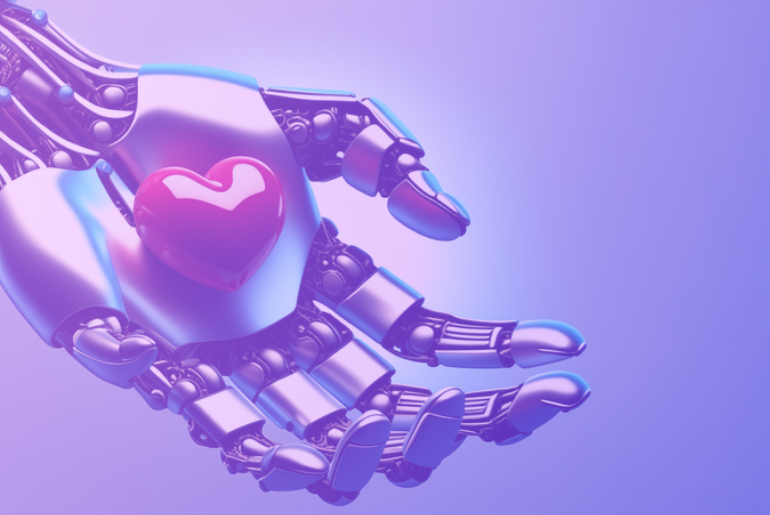


The jobs we humans do can be broadly grouped under four (PACE) categories: Physical jobs, Analytical jobs, Creative jobs, and Emotional jobs. The basis of the categorisation is which part of the body-mind system is crucial for a given job. In the case of physical jobs, for instance, the muscle power is crucial, whereas when it comes to analytical and creative jobs, what can be considered important are the left and the right brain, respectively. And emotional jobs are heart-based (not the physical heart, though). However, these are not watertight compartments. There can be no job that is purely physical, solely analytical, 100% creative, or entirely emotional. While one of these elements can be predominant in any particular job, the contributions of other aspects can be significant as well.
In the realm of writing, let AI be the wind beneath our wings, not the pilot of our stories.
A quote actually generated by AI!
Today, machines can do nearly all of these PACE jobs. Mechanisation was the forerunner. It disrupted physical/manual jobs. Then came computerisation, which quickly established itself as a highly productive candidate for performing most analytical jobs. Now with the advent of AI, machines are excelling in creative jobs, such as writing and painting. And, it is just a matter of time before technology demonstrates its capability in performing the so-called emotional jobs, such as those of nurses or teachers which require a rich dose of empathy, love and compassion to succeed. For instance, with IoT sensors, new-age robots can accurately gauge our moods and accordingly change their responses, and thus come across as considerate nurses and teachers.
But to call this phenomenon of technological advancements as the PACE of automation is not correct. For, the best use cases of technology in most jobs are about augmentation, and not full automation. It holds especially true to jobs that require human discretion. Writing is one such job. Though tools like ChatGPT and Google Bard are gaining traction, full automation can lead to undesirable outcomes. There are growing concerns for instance as to how these AI applications are already having a negative impact on the learning outcomes of students as they carry out research and writing tasks on behalf of students.
But as it is, AI is neutral, like any other technology. It can make students or anybody in the business of writing either productive or unproductive; creative or unimaginative. Consider these two factors: thinking and writing. We can have four possible use cases involving these two factors. As the following illustration shows, the ideal case is some sort of collaboration between natural intelligence and artificial intelligence. Humans can think, and AI can write. In some special cases, AI can think and we can build our writing based on AI’s ideas. After all, AI can analyse millions of data and documents and can generate insights at a pace that humans can never hope to match.
| Case | Human | AI |
|---|---|---|
| Ideal | Thinks | Writes |
| Special | Writes | Thinks |
These are clear cases of a writer augmenting the powers of Large Language Models that power the conversational bots. However, what leaves much to desire are the other two possibilities:
| Cases | Thinking | Writing |
|---|---|---|
| Unproductive | Human | Human |
| Unimaginative | AI | AI |
One is not using AI either in (‘generative’) thinking or in writing. It can make us unproductive. It is well established that it is not AI that takes our jobs but it is people augmenting the power of AI who do. The other extreme is expecting AI to do everything. Full automation of thinking and writing. In this case, AI gains and humans lose – as it can have a negative impact on our thinking and creative capabilities.
Hence, in writing, as in other PACE jobs, AI phobia can make us unproductive and surrendering to AI can render us unimaginative. Only augmentation can make us both productive and creative.